
California’s Bumper Crop Might Not Yield the Oil Some Predicted

By Wendy Logan

Earlier this month, with preliminary harvest forecasts looking strong for California’s olive growers, the California Olive Oil Council reported an expected yield of a record 4 million gallons (15.14 million liters) of olive oil.

The prediction represented a huge jump from the 2.4 million gallons (9.1 milliom liters) produced in 2014.

Some, like The Olive Press’ Nancy Cline, concurred, reporting, “We’re very excited about seeing this bumper crop for 2015. The olives are coming in and we’re operating the press 24 hours a day. The oil is looking magnificent and we’re delighted.”

I think people are seeing the tonnage on the trees and assuming. Some jumped the gun.- Adam Englehardt, Cobram Estate

Not so fast say a few others, whose high fruit yield may not translate into the jump expected in oil volume.

“That prediction might be a bit aggressive,” said California Olive Ranch CEO Gregg Kelley. “I can tell you we do see a large crop from a tonnage perspective. So on that front, all the news is true, and the quality is fantastic. We haven’t seen quality this high across the board for two or three years.

“But on the flip side, though our yields are high, heavy tonnage often indicates lower fat content,” Kelley cautioned. “It’s fine — we’ll likely net out about what we expected.”

Having begun in early September, COR won’t complete their harvest until mid-November. With the weather still a big factor in the harvesting process, Kelley said it’s wait-and-see on oil yield until then.

At the Cobram Estate California operation, Adam Englehardt was just coming from the processing plant when reached by phone. His take was similar to that of Kelley: “It’s better than last year, but I’d be surprised if it’s quite the bumper crop expected. I think people are seeing the tonnage on the trees and assuming. Some jumped the gun. But a heavy crop usually produces less oil than a light one.”

“The tonnage out of our fields is pretty good — average to above-average. But the yield is less than at this time last year, based on the fact that there’s not a lot of oil in the fruit yet.”

Weather is always a factor, Englehardt noted, with a warm, dry spring in 2015 and a lack of adequate irrigation stressing the trees. It’s not so much that they don’t bear fruit, he stated, reiterating that such conditions do not help to maximize the olives’ oil yield.

Article published in Olive Oil Time on Oct. 15, 2015

Read more

Greece’s Early Harvest Olive Oils

By Lisa Radinovsky

Early harvest extra virgin olive oils can be more expensive and hard to find than other extra virgin oils since unripe olives produce less oil and need to be picked right from the trees. Even so, more are finding their bitter taste, extra low acidity, and higher antioxidant content worth the money.

According to Agronews’ Alexander Bikas, early harvest olive oil costs at least one euro more than conventional olive oil. Bikas wrote that the auctions of the Agricultural Cooperative of the Holy Apostles in Laconia, Greece, which saw the sale of oils produced from Athinoelia and Messinia Koroneiki olives this month to the Italian company Alta Marena for €4.60 per kilogram, “represent a barometer of olive oil prices in Greece,” which leads him to expect Greek EVOO produced later in the season to go for around €3.60.

Bikas also noted that very limited quantities of olive oil were produced from unripe fruit in Greece last year. However, he emphasized that its high polyphenol content appeals to “demanding foreign markets for both pharmaceutical use and “the gourmet restaurants of Italy, the USA and England.”

An authentic early harvest olive oil needs very highly skilled people and carries the passion of those people and the characteristics of the region- Emmanouil Karpadakis, Terra Creta

Argyris Bouras, owner of Eleones Hellenic Olive Products, told Olive Oil Times that he does not believe early harvest olive oils are popular in Greek stores, although Italians like to use early harvest Greek oils to “blend and upgrade low grade olive oils.” On the other hand, many farmers might simply keep the first oil of the season for their own family and friends leaving little available for the marketplace.

Nevertheless, Agronews lists several advantages to pressing unripe olives: gathering fruit early gives the trees a break that leads to high returns every year; harvesting early reduces the chance of damage to olives from frost, hail and similar weather problems, thus reducing farmers’ risks; and the excellent nutritional value of early harvest olive oil is acknowledged worldwide, which makes it a “super-weapon” for olive oil farmers and producers.

The higher chlorophyll content in unripe olives makes the early harvest oil, called “agourelio” in Greek, greener and richer in healthy polyphenols. According to the abstract of a recent study, “there is a positive correlation of a high level of oleocanthal and oleacein in olive oils with the early time of harvest.”

To promote local agricultural products, the Regional Unit of Halkidiki in northern Greece commissioned an analysis of 32 samples from the Halkidiki early olive oil harvest of 2014-15 by the National and Kapodistrian University of Athens Department of Pharmacognosy and Chemistry of Natural Products. The results of the study, which used the Nuclear Magnetic Resonance (NMR) method developed by Dr. Prokopios Magiatis, were said to prove the high nutritional value of Halkidiki early harvest olive oil compared with other Greek and foreign extra virgin olive oils, given its richness in oleocanthal and oleacein.

The average polyphenol content in the samples from Halkidiki was 495 mg/kg, compared with an international average of 330 mg/kg. Yanni’s Limited PDO Halkidiki Early Harvest boasted the highest level: 1026 mg/kg.

Since 2013, some of the oil that meets the appropriate high quality and production requirements, including milling by October 15, has been distinguished by PDO status as “Agoureleo Chalkidikis.” The polyphenols identified in the Halkidiki early harvest oils have been credited with significant anti-inflammatory, antioxidant, cardioprotective and neuroprotective properties.

Early harvest olive oils outside Halkidiki have also shown the high polyphenol content associated with health benefits. For example, a test of the Governor brand’s unfiltered EVOO using the NMR method showed “the highest levels of phenolic compounds ever recorded in Greece,” 1141 mg/kg, according to the company’s website. George Dafnis, co-owner of Olive Fabrica, which produces this oil, told Olive Oil Times the early harvest of the Lianolia olives in Corfu begins in mid-October each year.

“Early harvest” can refer to different harvest times in different parts of Greece, given variations in climate, olive variety, and elevation. Argyris Bouras explained that the first olive oil of the year comes from Halkidiki, which is more famous for Greece’s largest table olives, the green Hondrolia. Eleones Early Harvest is produced in limited quantities from olives handpicked beginning as early as mid-September, pressed the same day, and bottled in Halkidiki. According to Bouras, Eleones Early Harvest (acidity 0.17) has a shelf life of up to 18 months, rather than the usual 9-10 months for many early harvest oils, because the high levels of antioxidants of Halkidiki delay oxidation.

It is possible to find early harvest Greek extra virgin olive oils produced as late as early November, such as Militsa Limited Release Early Harvest EVOO or Esti Early Harvest, which won a Gold Award at the 2014 NYIOOC. These are both made from Koroneiki olives hand-harvested in the southern Peloponnese.

However, mid October is a more common time for early harvest olive oil production in most of Greece. For example, the Olive Table’s Organic Early Harvest Single Estate EVOO originates in family-owned Koroneiki olive groves in the mountain village of Christianoupolis in Messenia, slightly northwest of Militsa, where the unripe olives are handpicked starting in the second or third week of October and crushed within hours of harvesting.

Within the next few weeks, Terra Creta in Kolymvari, Crete will begin offering its first early harvest extra virgin, with just 4,000 bottles of spicy EVOO produced from Koroneiki olives harvested in mid-October. Marketing Manager Emmanouil Karpadakis emphasized that “a specialized group of professional farmers” with “scientific support” will bring the olives to the mill only a few hours from harvesting. “An authentic early harvest olive oil needs very highly skilled people and carries the passion of those people and the characteristics of the region,” he said.


source: Olive Oil Times, October 2015


Read more

Economists hail Construction as strongest sector of U.S. Economy

by Wayne Grayson

Home-construction-site-prepWith construction spending at a 7-year high, single-family home starts up 19 percent year over year, and hiring at pre-recession highs despite a widespread shortage of skilled workers, it’s no secret within the industry that things have picked back up and then some.

And though financial analysts have largely taken a wait-and-see approach before hailing the industry’s rebound, most are now willing to label the industry as “booming,” and some are even going so far as to saying it’s turned into a full-fledged economic engine for the U.S. economy.

According to a report from MarketWatch, construction added 1.3 percentage points to a “solid 3.7% annual gross domestic product” in the U.S. during the second quarter. And the industry currently makes up nearly 5 percent of the country’s GDP, according to a note to clients from IHS Global Insight economist Patrick Newport.

Though some analysts feared a bit of backsliding from the industry in the third quarter, the July spending report from the Commerce Department assuaged any of those concerns, the MarketWatch report says. Thanks to private construction, particularly that of single-family homes, U.S. construction spending has reached $1.08 trillion, the highest level since May 2008.

“The overall impression from the past few months is that the construction sector overall is the strongest part of the economy, with spending up at a remarkable 26% annualized rate in the three months to July,” Ian Shepherdson, chief economist at Pantheon Macroeconomics, told the publication


Article published in Equipment World on Sept. 18, 2015


Read more

Growth Slows in United States and Europe, Reports Show

by Reuters

The outlook for the global economy became a little bleaker on Wednesday as reports of slower growth in the United States and Europe followed data from China that showed a worsening manufacturing downturn.

“There is substantial concern at present that global demand weakness is dampening the economy in the industrial countries,” said Jörg Krämer, chief economist at Commerzbank.

Last week, the global market volatility of the last month was high on a list of reasons the Federal Reserve did not raise an important interest rate, as many had expected, for the first time in almost a decade.

Growth in the manufacturing sector in the United States showed no month-over-month change in September, staying at August’s sluggish pace, according to an industry report released by the financial data company Markit on Wednesday.

Markit said its preliminary United States manufacturing purchasing managers’ index for September was 53. That was the same reading as in August, and the lowest figure since October 2013.

Job creation also slowed in September, with the index at 51.4, its weakest since July 2014, down from a final August reading of 52.4.

A strong dollar, flagging demand in many export markets and reduced capital spending by energy and other companies were dragging on manufacturing in the United States, according to Chris Williamson, chief economist at Markit.

“The survey is indicating the weakest manufacturing growth for almost two years, meaning the sector will have acted as a drag on the economy in the third quarter,” Mr. Williamson said.

Markit said signs were emerging that dwindling demand from Asia, led by China, was starting to hurt businesses in the eurozone.

Private business growth in the eurozone slowed in September, leading to fewer new jobs and forcing factories to reduce output. The Markit composite flash purchase managers’ index for the bloc came in at 53.9 in September, down from 54.3 last month. Markit said the index pointed to third-quarter growth of 0.4 percent.

“It is hard to see eurozone growth really kicking on,” said Howard Archer at IHS Global Insight. “There is the very real risk that slowing growth in emerging markets like China not only hits eurozone exports but also has a negative impact on business sentiment and leads to a scaling back of investment and employment plans.”

Business activity in Germany, the biggest economy in the eurozone, slowed slightly in September, while activity rebounded in France as manufacturing output returned to growth after two consecutive months of decline.

The preliminary Caixin/Markit purchasing managers’ index for China fell to 47.0, the worst since March 2009. It was the seventh straight month of contraction for the Chinese manufacturing sector.

The figures underline the malaise in China, the world’s second-largest economy behind the United States, and just how difficult it will be for policy makers to steer the economy out of the biggest downturn in decades.

Article published in NY Times on Sept. 23, 2015

Read more

North Carolina

North Carolina1
From the misty mountains to the sunny coast, North Carolina is a variety vacationland, featuring natural beauty, history, arts and adventure. Thousands flock to North Carolina in search of the wonderful outdoors lifestyle and fascinating cultural heritage showcased in many blockbuster movies – including both Dirty Dancing and the Last of the Mohicans. The highest mountains in the eastern US are located in western North Carolina, home to the Blue Ridge Mountains and Great Smoky Mountains, all part of the 1,500 mile Appalachian Mountain Range. Here activities include rock climbing and whitewater rafting, while in the winter the adventurous can ride the slopes on skis, tubes or snowboards.
 
In central North Carolina, you’ll find one-of-a-kind shopping or can tee off on one of the state’s 400 golf courses, including Pinehurst – the home of American golf. In 2010 travellers will also be able to visit the very first NASCAR Hall of Fame in Charlotte, allowing racing buffs to take in the full history of this thrilling sport. The area along the coast has a wide range of accommodation from luxurious eco-lodges to charming welcoming guesthouses. Here visitors can dive into water sports like boating, swimming and saltwater fishing; climb historic lighthouses and bask in the warm sun on the Atlantic coastline.


Source: Business Partners Magazine, Sept – Oct 2015

Read more

Retail Sales in U.S. Rise as Consumers Unshaken by Turmoil

by Victoria Stilwell


Retail sales in the U.S. climbed for a second straight month, a sign consumers may be looking past recent volatility in financial markets.

The 0.2 percent increase in August followed a 0.7 percent gain in July that was larger than previously reported, Commerce Department figures showed Tuesday in Washington. The median forecast of 84 economists surveyed by Bloomberg called for a 0.3 percent advance.

Although confidence has taken a hit from stock-market turmoil and global-growth concerns, the data show households are still putting their savings from cheap energy to work. More jobs and higher pay would go a long way in supporting household spending, which Federal Reserve policy makers are watching as they consider raising interest rates as soon as this week.

“The trend is strong and robust,” said Gregory Daco, head of U.S. macroeconomics at Oxford Economics USA in New York, who correctly forecast the increase in retail sales. Tuesday’s data shows spending is “resistant to outside shocks, and that’s quite important at this point in time.”

Estimates in the Bloomberg survey ranged from a decrease of 0.1 percent to a 0.6 percent gain. July retail sales were previously reported as up 0.6 percent. June data was unrevised at little changed.

Another report showed that while consumers are holding up, factories are struggling. Manufacturing in the New York region contracted in September for a second straight month, reflecting declining orders and employment, according to figures from the Federal Reserve Bank of New York.

Broad-Based Gains

Ten of 13 major retail categories showed increases last month, including auto dealers, restaurants and clothing stores, the Commerce Department’s report showed.

A 1.8 percent drop in receipts at gas stations weighed on the retail sales figures in August as the cost of a gallon of regular gasoline fell 7.5 percent last month. The government’s data aren’t adjusted for changes in prices.

Sales climbed 0.7 percent at automobile and parts dealers last month after rising 1.3 percent in July. The data mesh with industry data from Ward’s Automotive Group that showed sales of cars and light trucks soared to a 17.7 million annualized rate in August, the most since July 2005. Ford Motor Co., Fiat Chrysler Automobiles NV and General Motors Co. all reported robust sales powered by pickups and sport utility vehicles.

Retail sales excluding autos increased 0.1 percent in August after advancing 0.6 percent the month before, the Commerce Department report showed. They were projected to rise 0.2 percent, according to the Bloomberg survey median.

Calculating GDP

The figures used to calculate gross domestic product, which exclude categories such as food services, auto dealers, home-improvement stores and service stations, increased 0.4 percent last month after rising 0.6 percent. The Bloomberg survey median projected a 0.3 percent advance.

Tuesday’s report confirms a steady-as-she-goes narrative that’s characterized consumer spending throughout the recovery. In turn, spending has become a major pillar of support for growth. The economy expanded at a 3.7 percent annualized rate in the second quarter on bigger gains in consumer and business spending, as well as a surge in inventories.

Lower energy prices and solid labor market progress are supporting consumption, which economists surveyed by Bloomberg project will grow at around a 3 percent annualized pace for the second half of the year. Payrolls climbed by 173,000 last month while the unemployment rate dropped to a seven-year low of 5.1 percent.

Wages, Employment

Still, wages have yet to significantly pick up, which may be causing some households to be more cautious about their spending plans. Hourly pay is still tracking in the same narrow range that’s characterized the current recovery.

Meanwhile household wealth took a hit as the Standard & Poor’s 500 Index fell 6.3 percent last month, the most since May 2012. That decline hurt consumer confidence, with the University of Michigan index this month falling to the lowest level in a year.

Fed policy makers are watching financial markets as they consider when to raise their benchmark interest rate for the first time since 2006. They will announce their decision at the conclusion of their two-day meeting on Sept. 17.


Article published on Bloomberg Business – Sept. 15, 2015


Read more

What America Eats

by Jenna Telesca


What consumers are looking for in a restaurant has undergone a radical change.

Consumers want more. They don’t just want to consume food, they want to live through food. They want to feel good about all aspects of their meal: What a brand stands for, where the ingredients come from, and how the food is prepared.

A focus on ingredients and preparation doesn’t mean that diners are all 
turning to healthful options. Nutrition isn’t as important as freshness. Transparency is key. Perception is the new rule. Yes, contradictions abound.

This change has been spearheaded by Millennials, but it would be foolish to consider the shift limited to consumers age 18 to 34. This new mindset has infused the food culture and there is no turning back.

Restaurants must adapt quickly to the new consumer, or risk getting left behind.

In this special report, Nation’s Restaurant News editors take a careful look at what diners’ changing relationships with food mean for restaurant supply, menu, marketing and operations going forward. This report outlines the rapid change occurring on plates across the U.S., and what restaurants can do about it. This is what America eats.


Article published on Nation’s Restaurant News – Sept 18, 2015

Read more

Debate για το μέλλον της ελληνικής οικονομίας

Debate για το μέλλον της ελληνικής οικονομίας

Το Μοντέλο Ανοικοδόμησης & Ανάπτυξης της Ελληνικής Οικονομίας
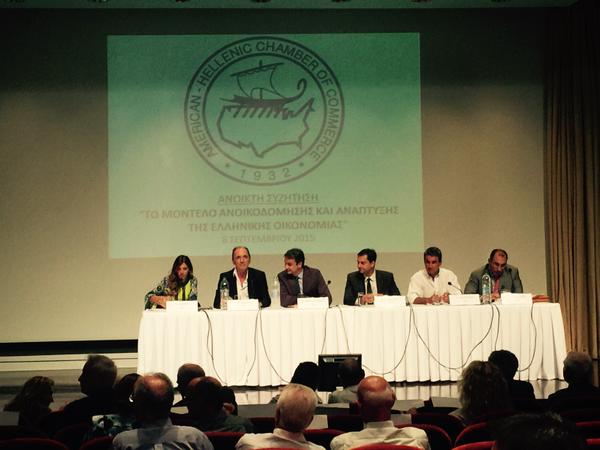
Το Ελληνο-Αμερικανικό Εμπορικό Επιμελητήριο, με αφορμή τις επερχόμενες εκλογές διοργάνωσε, διοργάνωσε με επιτυχία την Τρίτη 8 Σεπτεμβρίου στην Αμερικανική Σχολή Κλασσικών Σπουδών ανοιχτή συζήτηση για το μέλλον της οικονομίας.

Στην συζήτηση συμμετείχαν οι κκ.: Γιώργος Σταθάκης (Σύριζα), Κυριάκος Μητσοτάκης (Νέα Δημοκρατία), Χάρης Θεοχάρης (Το Ποτάμι), Ανδρέας Λοβέρδος (Δημοκρατική Συμπαράταξη), Δημήτρης Καμμένος (Ανεξάρτητοι Έλληνες) υπό τον συντονισμό της δημοσιογράφου κ. Κάτιας Μακρή. Αξίζει να επισημανθεί ότι είναι το πρώτο debate με αποκλειστική θεματολογία την επιχειρηματικότητα, την αγορά και την εθνική οικονομία από επιχειρηματικό φορέα.

Ακολουθήθηκε η γνωστή διαδικασία χρόνου και ερωτήσεων και στο τέλος υπήρξε ανοικτή συζήτηση με το κοινό. Σημαντικό για τα πολιτικά πράγματα της χώρας ήταν το ήθος και η ποιότητα διαλόγου που επικράτησε στην συζήτηση.

Χαιρετίζοντας το debate, ο πρόεδρος του Επιμελητηρίου κ. Σίμος Αναστασόπουλος στάθηκε στο γεγονός ότι πρώτη φορά Επιμελητήριο παίρνει την πρωτοβουλία της διοργάνωσης debate με προσανατολισμό την άντληση απαντήσεων για τα προβλήματα της επιχειρηματικότητας και της Ελληνικής οικονομίας. Παράλληλα, είναι άλλη μια απόδειξη της αδιαπραγμάτευτης θέσης του υπέρ του διαλόγου και της συναίνεσης.

Ο κ. Γιώργος   Σταθάκης υποστήριξε ότι η συμφωνία θα φέρει ανάπτυξη το β τρίμηνο του 2016. Απαντώντας για την ανεργία πρότεινε: Ενεργητικές πολιτικές απασχόλησης, Ενίσχυση νεανικής επιχειρηματικότητας, Ανασχεδιασμός προγραμμάτων, Έκτακτα προγράμματα προσωρινής απασχόλησης, Αύξηση της απασχόλησης στον ιδιωτικό τομέα. Σχετικά με την προσέλκυση επενδύσεων τόνισε ότι απαιτείται απλοποίηση αδειοδοτήσεων και αποσαφηνισμός περιβαλλοντολογικού, χωροταξικού και φορολογικού. Τέλος, απαντώντας για την άρση των capital controls, είπε χαρακτηριστικά: «Ως πολιτικός θα πω ότι θα αρθούν σε 2 μήνες ως οικονομολόγος δεν μπορώ να πω πότε θα αρθούν, Θα αρθούν ίσως μόλις ανακεφαλαιοποιηθούν οι τράπεζες».

Ο κ. Κυριάκος Μητσοτάκης χαρακτήρισε «τραγικό το γεγονός ότι η Κομισιόν προβλέπει ύφεση για το 2015 όταν πριν λίγους μήνες έβλεπε ανάπτυξη». Ενώ πιστεύει ότι «μετά το β μισό του 2016 μπορεί η οικονομία να ανακάμψει». Για την αντιμετώπιση της ανεργίας έθεσε τις εξής προϋποθέσεις: να επιλυθεί επιτέλους το θέμα με τις «ΣΚΟΥΡΙΕΣ» και να μην ανασταλεί αυτή η επιχειρηματική δραστηριότητα, να ξεμπλοκαριστούν μια σειρά από επενδύσεις από τις περιβαλλοντολογικές αδειοδοτήσεις, στήριξη της νεανικής επιχειρηματικότητας, στήριξη νέων επιχειρήσεων, πολιτική συμφωνία και συναίνεση στα βασικά θέματα, έμφαση στις Μικρομεσαίες επιχειρήσεις, επενδύσεις. Ενώ για τη προσέλκυση επενδύσεων, η θέση του είναι: «Υπάρχει χάος το οποίο πρέπει να διευθετηθεί. Σε μια χώρα που επικρατεί το χάος δεν έρχεται κάποιος να επενδύσει γιατί ανταγωνιζόμαστε και άλλες χώρες. Το κράτος να διαχειριστεί σωστά την ακίνητη περιουσία. Να αποσαφηνισθούν οι χρήσεις της γης με στόχο την προσέλκυση περισσότερων επενδυτών».

Ο κ. Χάρης Θεοχάρης επεσήμανε ότι η λύση για την ανεργία είναι η υλοποίηση των μεταρρυθμίσεων, η εφαρμογή του μνημονίου και η ελάφρυνση της φορολογίας των επιχειρήσεων ώστε να μπορεί να προσλαμβάνει υπαλλήλους. Σχετικά με τις επενδύσεις υποστήριξε ότι «σημαντική είναι η σταθερότητα στο φορολογικό σύστημα. Οι πολιτικές αποφάσεις πρέπει να συμπεριλάβουν: 1.περιβαλλοντικές  μελέτες, 2. όχι αλλαγές στις αντικειμενικές αξίες, 3. Δικαιοσύνη-αλλαγή του κώδικα πολιτικής δικονομίας, 4. Να οργανωθεί καλά το κτηματολόγιο. Τέλος, για το ΦΠΑ 23% στην ιδιωτική εκπαίδευση, δήλωσε: «Δεν είναι παραγωγικό μέτρο. Τα ισοδύναμα πρέπει να βρεθούν μέσω άλλων παρεμβάσεων. Κατ’ ελάχιστον να δημιουργηθούν οι συνθήκες ώστε τα φροντιστήρια να προστατευτούν από την μαύρη εργασία.».

Ο κ. Ανδρέας Λοβέρδος απαντώντας στο σημαντικό ερώτημα για την ανεργία είπε: Χρειάζεται να καλλιεργηθεί το κατάλληλο επενδυτικό κλίμα, Άμεση ώθηση στην επιχειρηματικότητα, Άμεσα μέτρα υπέρ της ιδιωτικής πρωτοβουλίας και επιχειρηματικότητας, Χρειάζεται ενθάρρυνση των αδειοδοτήσεων και συμφωνία στο φορολογικό. Ενώ για το Μνημόνιο επεσήμανε: «Το Μνημόνιο δεν βγαίνει. Είναι πολύ δύσκολο πολιτικά. Χρειάζεται μεγάλη και ισχυρή κυβέρνηση, 220 βουλευτών. Συμφωνία 2 μεγάλων κομμάτων. Είναι μια κοροϊδία η συζήτηση περί ισοδυνάμων».

Ο κ. Δημήτρης Καμμένος τόνισε ότι: «Το κράτος να ειδωθεί σαν επιχείρηση και όχι σα νοικοκυριό. Θέλουμε να προσελκύσουμε επενδυτές» και ότι «οι φόροι να φύγουν και να πάνε στην κατανάλωση και να βρει άμεσα η Ελλάδα την θέση της στον παγκόσμιο χρηματοοικονομικό χάρτη». Για τις επενδύσεις απάντησε: «Πρέπει να υπάρχει σταθερότητα. Να τεθεί η βάση και μετά οι προτάσεις. Σταθερότητα ακόμα και στη φορολόγηση. Δεν μπορεί να αλλάζει το ΦΠΑ συνέχεια. Η Ελλάδα έχει πλεονέκτημα σα χώρα και πρέπει να βρεί τον ρόλο της αλλά και να έχει σταθερή στρατηγική». Για την ίδρυση ιδιωτικών πανεπιστημίων, υποστήριξε: «Η Ελλάδα πρέπει να έχει ιδιωτικά πανεπιστήμια και κυρίως στους 2 σημαντικότερους τομείς στην Ναυτιλία και τον Τουρισμό. Δυστυχώς δεν υπάρχει σήμερα σύνδεση ανάμεσα στην αγορά εργασίας και το πανεπιστήμιο. maps vietnam Θα πρέπει να υπάρξει εκσυγχρονισμός. Η επένδυση στην εκπαίδευση θα είναι ένα μεγάλο κομμάτι εσόδων και ανάπτυξης».


Το video της εκδήλωσης βρίσκεται εδώ: Link

debate02

debate06 debate01 debate03 debate04 debate05

Read more